

Journalism and Mass Communications Department

- About the Department
- Curriculum
- Faculty and Staff
-
Student Work
- Rockbridge Report
- Editing and Design for Journalism and Strategic Communication
- Investigative Reporting
- Covering Courts and the Law
- Audio Production, Podcasting, and Recording Your Voice
- Podcasting
- Cross-Cultural Documentary Filmmaking
- Multimedia Storytelling Design
- Sports Journalism
- The Magazine: Past, Present, Future
- AIM Insider
- Internships
- Scholarships
- Graduation and Retention Rates
The Department of Journalism and Mass Communications offers students two dynamic majors: Journalism and Strategic Communication. Both combine deep grounding in the liberal arts and sciences with solid experience in research, analysis and clear communication. Our graduates have an excellent reputation throughout the news industry, in public relations, and in a variety of other fields.

Mission Statement
As the nation’s only accredited journalism and mass communications program in a highly competitive liberal arts college, we remain committed to our first and highest mission: to educate, to broaden minds, and to inculcate habits of honor, careful analysis and reasoned discourse. We train students to produce excellent written and multi-platform work that can tell the nuanced stories of an increasingly diverse and pluralistic culture.
As a department with professional constituencies in journalism and strategic communication and an obligation to prepare citizens to participate in a democratic society, we seek to fulfill our mission by helping students develop abilities to think critically, to communicate clearly, to understand the ethical dimensions of the decisions they make, and to fully recognize the central role of news media in a free society.
Media historians recognize that the education of journalists at our institution dates back to 1869, when printer scholarships were established. Our professional responsibility has remained the same: educating students to perform the crucial function of informing communities.
Because the journalism and strategic communication professions rightfully expect our graduates to become competent practitioners, the department is committed to teaching students the skills and familiarizing them with the tools that are the standards of the industry. We remain committed to keeping abreast of those skills and tools as the information revolution continues. We are dedicated to helping students tell stories in text, through audio, via both moving and still images, and by using the ever-evolving tools of social media.
The department must fulfill these multiple responsibilities within its commitment to a liberal arts education and the curricular standards established by the Accrediting Council for Education in Journalism and Mass Communications.

Department Info
- P: 540-458-8432
-
Department of Journalism and Mass Communications
Reid Hall
Washington and Lee University
204 West Washington St.
Lexington, Virginia 24450

W&L Presents a Conversation with Reporters Russ Buettner and Sue Craig
The Pulitzer Prize-winning investigative journalists from the New York Times will give a public talk on March 25, followed by a book signing.
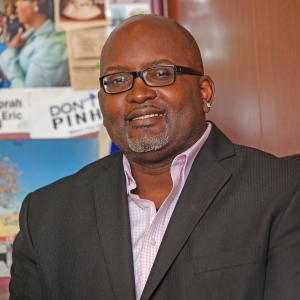
Eric Deggans Named Knight Chair in Journalism and Media Ethics at W&L
The NPR personality, journalist and media analyst will assume the position in July.

Charlotte Clymer to Deliver Institute on Media Ethics Keynote
Clymer will discuss advocacy communications in her March 19 lecture.

Journalism Panel to Examine Power and Influence Behind Sports and Media
The March 13 panel discussion at Leyburn Library will be moderated by John Miller ’77 and feature experienced sports journalists.
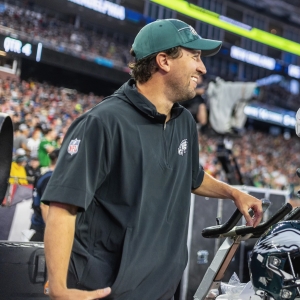
Brett Strohsacker ’06 Gives a Bird’s-Eye View of Super Bowl Victory
The vice president of football communications for the Philadelphia Eagles enjoys his team’s second Super Bowl victory.

Alden Wicker ’09 to Serve as the Fishback Visiting Writer at W&L
The author will deliver the Fishback Lecture on Wednesday, Feb. 12, via Zoom.

Whether he is trying a case or drumming with a jazz band, Curtis Joseph ’93, ’96L doesn’t miss a beat.
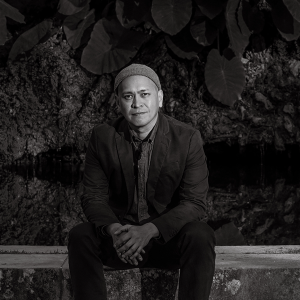
W&L Presents Premiere Screening of ‘Letters to Eleanore’
The Jan. 30 screening of the award-winning documentary about disability, perseverance and the story of a girl and her wheelchair is free and open to the public.

Student Organization Spotlight: WLUR
At WLUR-FM, Washington and Lee University’s radio voice since 1967, students get an introduction to audio production, podcasting and more.
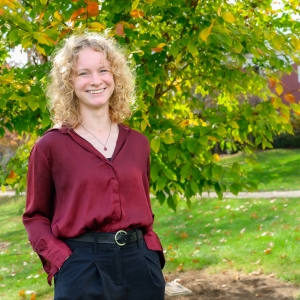
Munck has pursued her filmmaking passion through class projects, summer research and the Film Society Club.

Twelve W&L Students Awarded Gilman Scholarships to Study Abroad
The Gilman Scholarship Program offers awards of up to $5,000 to U.S. undergraduate students who are Pell Grant recipients.

Ady Dewey Co-Authors Paper in Journal of Virtual Exchange
The Reynolds Visiting Assistant Professor of Strategic Communications explores the role of laughter in cross-cultural virtual settings.